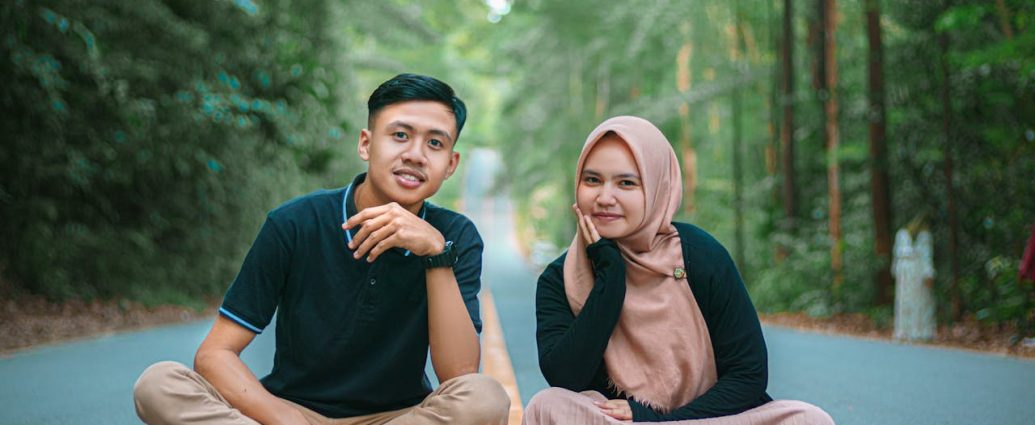
In many parts of the world, difference is not an abstract concept—it is lived daily. Neighbors belong to different faiths, students share classrooms across traditions, and communities negotiate coexistence in ways that are often fragile yet deeply meaningful. These encounters do not always produce harmony; at times, they expose tension, misunderstanding, and even conflict. As ICAS 2026 approaches, the question is not whether plurality exists, but how it is lived. Can difference become a foundation for ethical engagement, rather than a source of division? Plurality as Reality, Not Exception Plurality is sometimes treated as a challenge to be managed, rather than a reality to be embraced. Yet historical and contemporary Muslim societies have long navigated diversity inContinue Reading
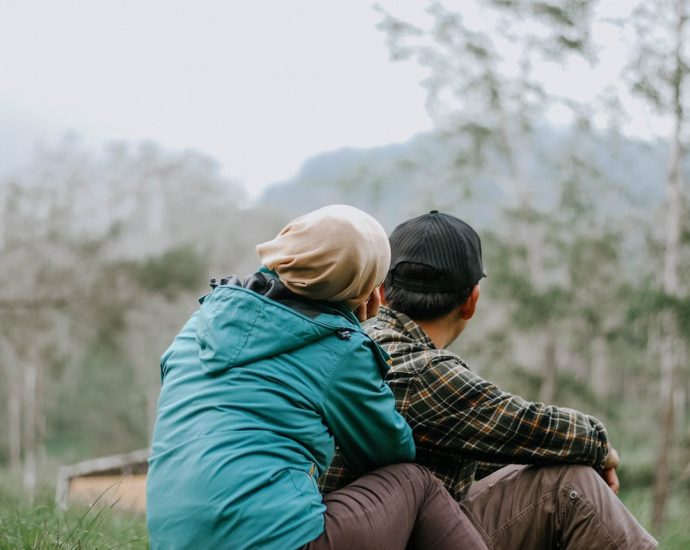
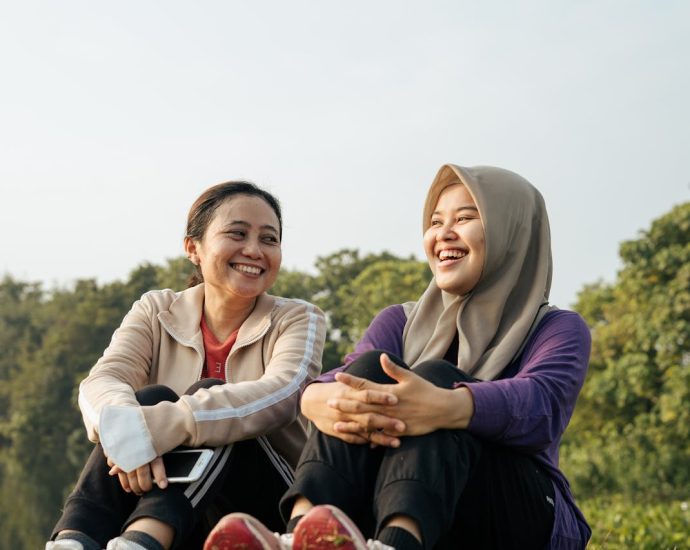
In many societies, law is presented as a neutral framework—designed to protect, regulate, and ensure order. Yet for women, especially in diverse Muslim contexts, legal systems often operate with ambivalence. They can offer protection, but they can also limit participation. They can recognize rights, yet still reproduce inequalities. As ICAS 2026 approaches, the question is not simply how women are positioned within legal systems, but whether those systems themselves can be reimagined. Can justice move beyond formal guarantees toward lived realities? Law as Lived Experience Legal texts often promise equality, but their implementation reveals gaps. Access to justice is shaped by social norms, economic resources, and institutional practices. For many women, navigating the legal system involves moreContinue Reading

Across many contexts, women’s bodies remain contested spaces—regulated by policy, shaped by culture, and interpreted through layers of religious and scientific discourse. Decisions about health are rarely neutral; they are entangled with access, knowledge, and power. From reproductive health to mental wellbeing, what appears as a personal matter often reflects broader structural conditions. As ICAS 2026 approaches, the question of women’s health cannot be treated as a technical issue alone. It demands a deeper reflection: how do we understand the body—not only as a biological entity, but as a site where dignity, faith, and social realities intersect? Beyond Biomedical Reductionism Modern healthcare systems have achieved remarkable advances, yet they often operate within a framework that isolates theContinue Reading

In many contemporary spaces, young Muslim women are speaking with a different kind of confidence. They move fluidly between identities—religious, digital, professional—without always feeling the need to resolve them into a single narrative. Their expressions are shaped as much by global flows of information as by local traditions, creating a hybridity that is both dynamic and, at times, unsettling for established frameworks. As ICAS 2026 approaches, their presence is not incidental. It raises a critical question: will the next generation simply inherit existing movements, or will they redefine them altogether? From Inheritance to Reinvention Every movement carries a legacy, but it is never transmitted unchanged. Younger generations do not receive ideas passively; they interpret, adapt, and sometimesContinue Reading

Long before formal meetings begin and after they end, there is another layer of work quietly unfolding—preparing food, caring for children, checking on family members, sustaining emotional connections. This labor rarely appears in conference programs, yet it forms the invisible infrastructure that allows participation to happen at all. For many women, leadership is never detached from care. It is embedded within it. As ICAS 2026 approaches, an important question surfaces: what kinds of work actually sustain women’s leadership, and why are they so often overlooked? Beyond Formal Economies Mainstream economic frameworks tend to prioritize measurable outputs—income, productivity, growth. Within these metrics, large portions of women’s labor remain undervalued or entirely invisible. Care work, community organizing, and informalContinue Reading

Scroll through any social media platform and a pattern emerges—not always obvious, but deeply influential. Certain voices are amplified, others fade into obscurity. What appears as organic visibility is often the result of algorithmic selection. In this digital landscape, narratives are not only produced by humans, but also curated—ranked, filtered, and distributed by systems that remain largely opaque. For Muslim women engaging in da‘wah, education, and advocacy, this environment presents both opportunity and challenge. The digital sphere offers unprecedented reach, yet it also introduces new forms of control. As ICAS 2026 approaches, the question becomes unavoidable: who truly shapes the narrative in the age of algorithms? From Pulpit to Platform Da‘wah has long been associated with physicalContinue Reading

In a conference space, difference becomes visible in subtle ways—accents, clothing, references, even the pace of speech. Participants arrive carrying their own worlds: histories, struggles, and ways of understanding faith and society. What appears, at first glance, as a shared platform is in fact a convergence of many distinct realities. ICAS 2026 will bring together Muslim women from diverse regions, each shaped by local contexts that cannot easily be translated into universal terms. The question is not whether these differences exist—they are inevitable—but whether they can become the basis of solidarity rather than fragmentation. The Challenge of Solidarity Solidarity is often invoked as an ideal, but its construction is far from simple. It requires more than sharedContinue Reading