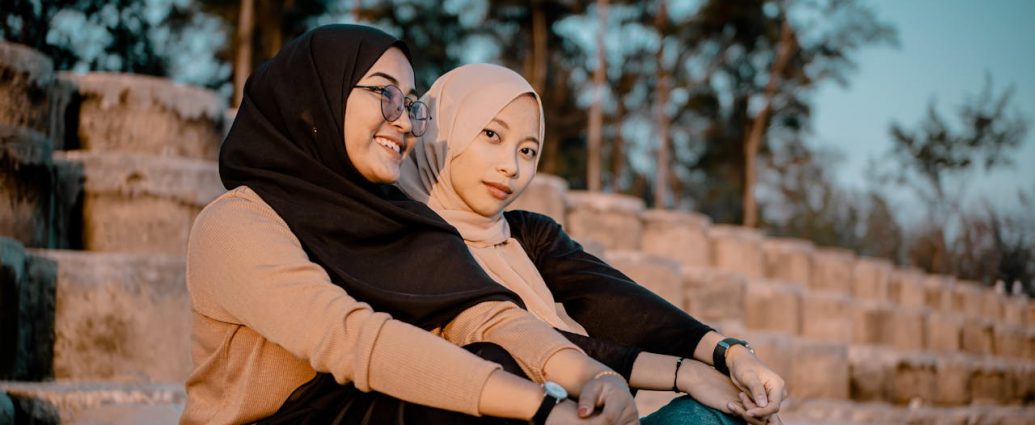
In many contemporary spaces, young Muslim women are speaking with a different kind of confidence. They move fluidly between identities—religious, digital, professional—without always feeling the need to resolve them into a single narrative. Their expressions are shaped as much by global flows of information as by local traditions, creating a hybridity that is both dynamic and, at times, unsettling for established frameworks.
As ICAS 2026 approaches, their presence is not incidental. It raises a critical question: will the next generation simply inherit existing movements, or will they redefine them altogether?
From Inheritance to Reinvention
Every movement carries a legacy, but it is never transmitted unchanged. Younger generations do not receive ideas passively; they interpret, adapt, and sometimes challenge them. What was once considered settled can become open to questioning.
In the context of ICAS, this dynamic becomes particularly visible. Established discourses on women’s leadership, Islamic thought, and social engagement may encounter new interpretations—ones that are shaped by digital cultures, transnational exposure, and shifting expectations of authority. This is not a rupture, but a process of reinvention.
Digital Natives, Ethical Seekers
Unlike previous generations, many young Muslim women have grown up within digital environments. Their engagement with knowledge is immediate, networked, and often non-linear. They access religious texts, scholarly debates, and global conversations through the same devices that connect them to everyday life.
Yet this accessibility does not eliminate the need for ethical grounding. If anything, it intensifies it. The abundance of information requires discernment—an ability to navigate competing interpretations and to anchor choices within meaningful values. ICAS 2026 offers a space where this negotiation between digital fluency and ethical depth can be explored.
Challenging Hierarchies of Authority
One of the most significant shifts brought by younger generations lies in their relationship to authority. Traditional hierarchies—whether academic, religious, or institutional—are no longer accepted without question. Authority is increasingly evaluated through relevance, accessibility, and authenticity.
This does not necessarily imply rejection, but it does demand transformation. Leaders and institutions are expected to engage in dialogue rather than simply deliver directives. For ICAS 2026, this presents both an opportunity and a challenge: how to create spaces where intergenerational exchange is possible without diminishing either experience or innovation.
New Forms of Activism
Youth engagement often takes forms that differ from conventional activism. Digital campaigns, creative expression, and decentralized organizing are becoming more prominent. These approaches can be more flexible and responsive, but they also raise questions about sustainability and long-term impact.
At ICAS, these emerging forms of activism may intersect with more established modes of organization. The interaction between them could generate new possibilities—combining the energy of youth with the experience of existing institutions.
Aisyiyah and Generational Continuity
Aisyiyah’s strength has long been its ability to sustain continuity across generations while remaining open to change. Its educational and organizational structures provide pathways for younger women to engage, learn, and contribute.
Within the framework of Risalah Perempuan Berkemajuan, the next generation is not seen as separate from the movement, but as its continuation. At the same time, their perspectives invite renewal. ICAS 2026 can serve as a meeting point where this continuity and change are negotiated.
An Open Question
As the conference draws near, the role of young Muslim women remains an open question—not because their presence is uncertain, but because their impact is still unfolding. Will they adapt to existing structures, or will they reshape them? Will their voices be integrated, or will they transform the conversation itself?
The answers will not emerge in a single moment. They will take shape through interaction, experimentation, and, at times, tension. But one thing is clear: the future of any movement depends not only on its foundations, but on its capacity to evolve.
ICAS 2026, in this sense, is not only about gathering voices—it is about listening to those who will carry the conversation forward.