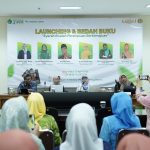
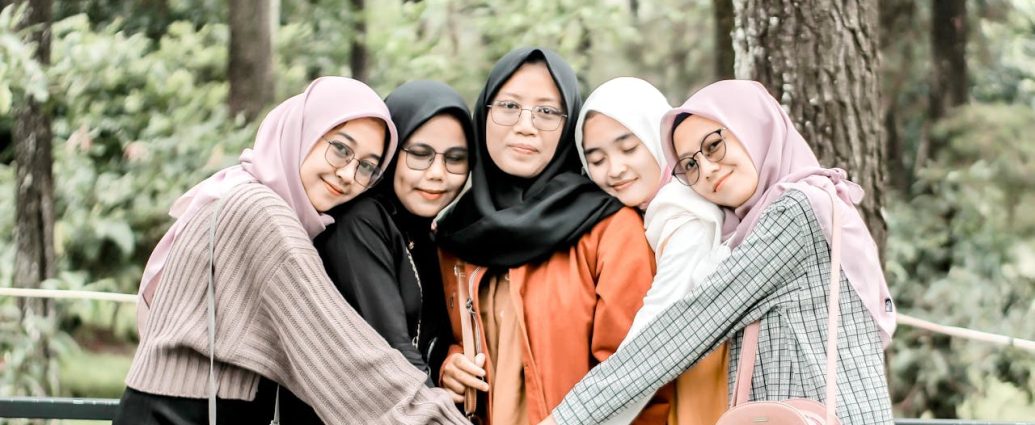
In a conference space, difference becomes visible in subtle ways—accents, clothing, references, even the pace of speech. Participants arrive carrying their own worlds: histories, struggles, and ways of understanding faith and society. What appears, at first glance, as a shared platform is in fact a convergence of many distinct realities.
ICAS 2026 will bring together Muslim women from diverse regions, each shaped by local contexts that cannot easily be translated into universal terms. The question is not whether these differences exist—they are inevitable—but whether they can become the basis of solidarity rather than fragmentation.
The Challenge of Solidarity
Solidarity is often invoked as an ideal, but its construction is far from simple. It requires more than shared identity or common goals. It demands the willingness to listen across differences, to recognize unequal positions, and to negotiate meanings without erasing complexity.
In global forums, there is always a risk that solidarity becomes superficial—built on generalizations that overlook the specificity of local experiences. ICAS 2026 must grapple with this tension. Can solidarity be rooted in genuine engagement rather than symbolic alignment? Can it hold together diverse perspectives without forcing them into uniformity?
Local Knowledge, Global Relevance
One of the strengths of a gathering like ICAS lies in its potential to connect local knowledge to global conversations. Practices that emerge in specific contexts—whether in community health, education, or environmental care—often carry insights that resonate far beyond their immediate setting.
Yet, the movement from local to global is not automatic. It involves translation, adaptation, and sometimes negotiation with dominant frameworks. The challenge is to ensure that local voices are not diluted in the process, but instead shape the direction of broader discourse.
Networks as Living Structures
If solidarity is to endure, it must take the form of networks—structures that allow relationships to continue beyond the event itself. Networks are not static; they evolve through interaction, shared projects, and ongoing communication.
ICAS 2026 has the opportunity to foster such networks among Muslim women scholars, activists, and practitioners. These connections can enable the exchange of ideas, the development of collaborative initiatives, and the strengthening of collective capacity. In this sense, solidarity is not a fixed achievement but a process that unfolds over time.
Power and Uneven Ground
Building global networks also requires acknowledging uneven ground. Not all participants enter the conversation with the same resources, visibility, or institutional support. Some voices are amplified more easily than others, while some remain at the margins.
Recognizing these imbalances is not about assigning blame, but about creating conditions where more equitable participation is possible. ICAS 2026 will need to remain attentive to these dynamics if it is to foster meaningful solidarity.
Aisyiyah’s Contribution to Collective Strength
Aisyiyah’s experience as a long-standing movement offers valuable insights into how solidarity can be cultivated across difference. Its work has long involved connecting individuals and communities through shared values while respecting local diversity.
In the context of ICAS, this experience can inform how global networks are built—not through homogenization, but through a commitment to mutual learning and collective growth. The principles embedded in Risalah Perempuan Berkemajuan provide a foundation for such an approach, emphasizing both unity and diversity.
As ICAS 2026 approaches, the possibility of building meaningful solidarity remains open. It will depend on how participants engage with difference—not as a barrier, but as a resource.
If successful, the conference may contribute to a form of solidarity that is both grounded and expansive—rooted in local realities, yet capable of shaping global conversations. Such solidarity does not erase difference; it works through it, creating connections that are resilient precisely because they acknowledge complexity.
In a world marked by fragmentation, this kind of solidarity is not only desirable—it is necessary.