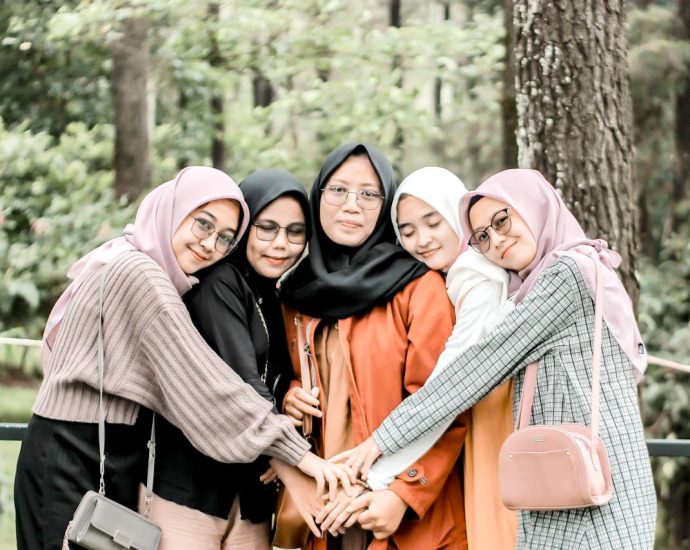

Yogyakarta, 11 June 2026 — During the invited speakers session of the International Conference on Aisyiyah Studies (ICAS) 2026, Prof. Pieternella van Doorn-Harder, a distinguished scholar of Muslim women and gender in Islam, delivered a thought-provoking presentation on the evolving role of women in shaping religious authority, knowledge production, and public engagement within contemporary Muslim societies. Drawing on decades of research on Muslim women’s movements and female religious leadership, Prof. van Doorn-Harder emphasized that women have historically played significant roles in the transmission of Islamic knowledge, community leadership, and social transformation. However, these contributions have often been marginalized or overlooked within mainstream narratives of Islamic history. A central argument of her presentation was that the growing visibilityContinue Reading
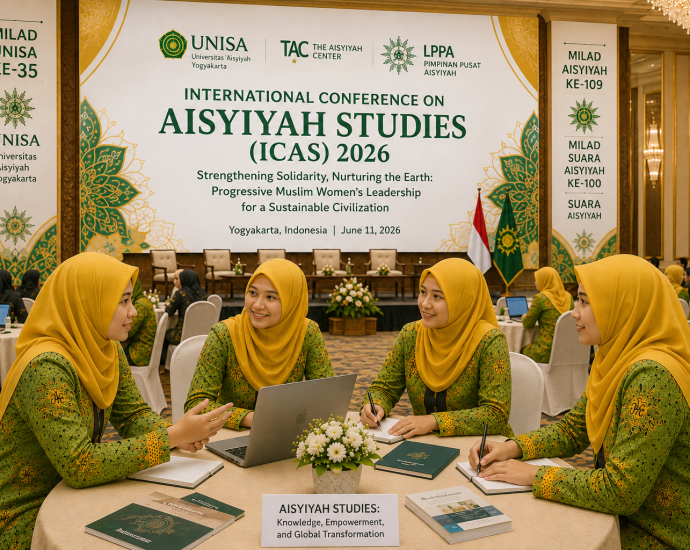
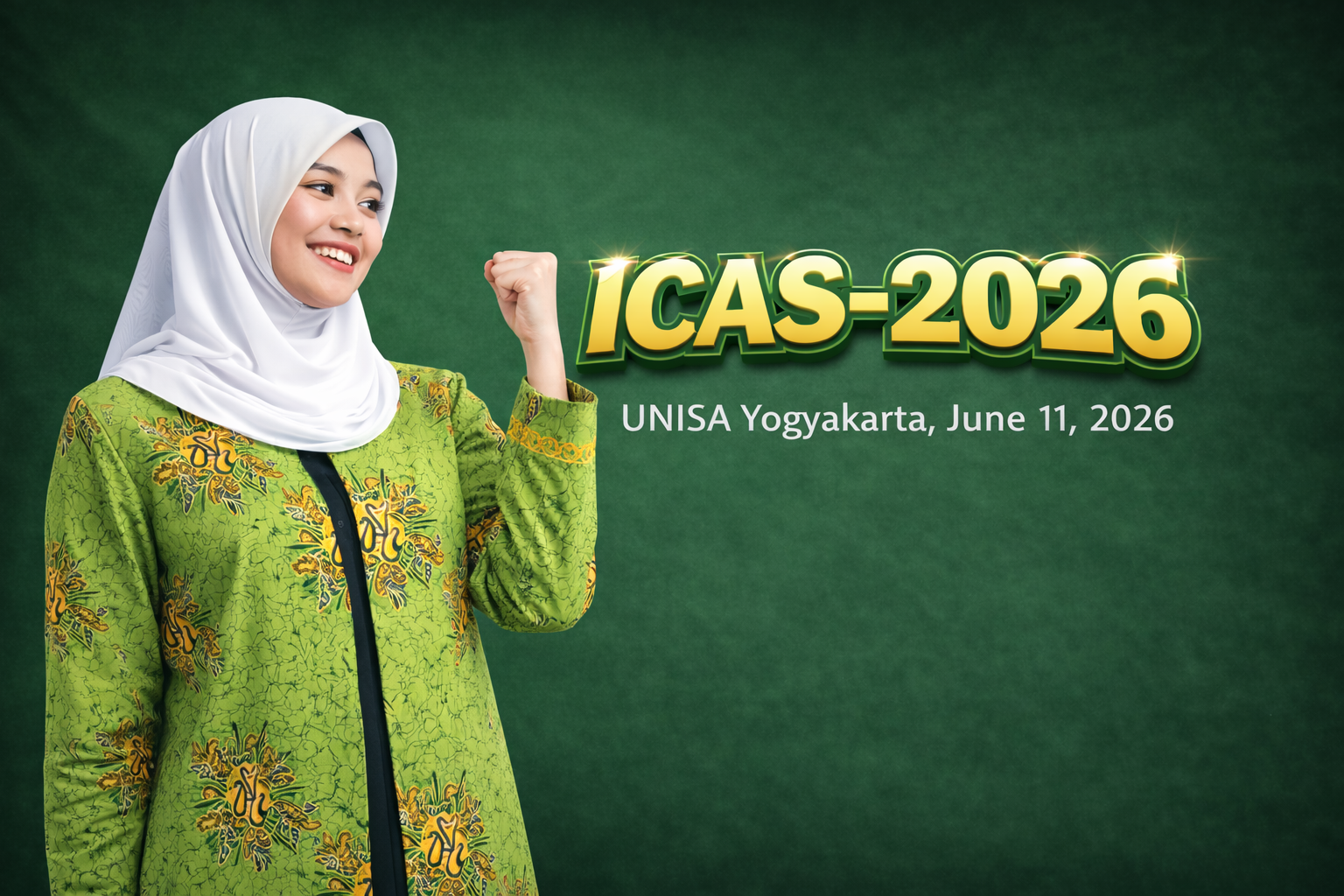
In celebration of the 35th Anniversary of Universitas ‘Aisyiyah Yogyakarta, the 109th Anniversary of ‘Aisyiyah, and the 100th Anniversary of Suara ‘Aisyiyah, The Aisyiyah Center (TAC) of Universitas ‘Aisyiyah Yogyakarta, in collaboration with LPPA Pimpinan Pusat ‘Aisyiyah, proudly presents the International Conference on Aisyiyah Studies (ICAS) 2026. ICAS 2026 is an international interdisciplinary forum that brings together scholars, researchers, students, activists, educators, policymakers, community leaders, and practitioners from various countries to discuss contemporary issues surrounding Muslim women, religion, social transformation, sustainability, health, education, digital culture, and global civilization. As societies around the world face interconnected challenges—including environmental degradation, technological disruption, social polarization, economic inequality, and declining public trust—there is a growing need for ethical reflection, collaborative action,Continue Reading

We are pleased to announce the list of full papers accepted for presentation at the International Conference on Aisyiyah Studies (ICAS) 2026. After undergoing a rigorous review and selection process, the accepted papers have been officially recorded by the committee, as listed in the attached document. Along with this announcement, we are also pleased to provide the official Letter of Acceptance (LoA), as attached, for all selected authors whose papers have been accepted for presentation at ICAS 2026. The Letter of Acceptance serves as an official confirmation from the organizing committee that the submitted paper has successfully passed the selection process and has been approved for presentation at the conference.Continue Reading

To enter a room is never a neutral act. Some arrive with ease, recognized and expected; others enter with a quiet awareness of being out of place. Space is not only physical—it is structured by norms, histories, and invisible boundaries that shape who feels entitled to speak, to lead, or even to remain. As ICAS 2026 approaches, the question of space becomes central. Not merely who is present, but how presence is experienced. Where do Muslim women stand—in institutions, in public discourse, in global conversations? And what does it take to transform presence into belonging? From Access to Belonging Over time, efforts have been made to increase women’s access to various spaces—education, leadership, policy forums. Yet accessContinue Reading

Every community lives through stories—some remembered, others forgotten, many never told. Narratives shape how identities are understood, how histories are preserved, and how futures are imagined. Yet not all stories carry equal weight. Some are amplified, repeated, and institutionalized, while others remain at the margins. As ICAS 2026 approaches, a critical question emerges: who tells the story of Muslim women? And just as importantly, whose stories are left untold? Narrative as Power Narratives are not neutral. They frame reality, define legitimacy, and influence perception. In global discourse, Muslim women are often represented through limited lenses—either as subjects of oppression or symbols of empowerment. Both frames, while containing elements of truth, can oversimplify complex lived experiences. To moveContinue Reading

Education is often imagined within walls—classrooms, lecture halls, formal curricula. Yet much of what shapes understanding happens beyond these spaces: in conversations, in digital interactions, in lived experiences that challenge and reshape what is taught. Learning, in this sense, is not confined to institutions; it is a continuous process of becoming. As ICAS 2026 approaches, the role of education invites reconsideration. Is it merely a means of transmitting knowledge, or can it become a force that transforms how individuals and communities engage with the world? From Transmission to Transformation Traditional models of education emphasize the transfer of knowledge from teacher to student. While this remains important, it is increasingly insufficient in a world characterized by rapid changeContinue Reading

Floods arrive earlier than expected, heat lingers longer than before, and seasons no longer follow familiar patterns. What was once discussed as a distant environmental concern now enters daily life with increasing urgency. The crisis is no longer abstract—it is lived, felt, and endured. Yet responses to this crisis often remain technical: policy frameworks, carbon targets, and institutional commitments. Necessary, but not sufficient. As ICAS 2026 approaches, a deeper question emerges: can environmental responsibility move beyond policy into an ethical way of life—one that is rooted in faith and practiced in everyday decisions? From Awareness to Ethics Environmental awareness has grown significantly over the past decades. People know more about climate change, biodiversity loss, and ecological degradationContinue Reading