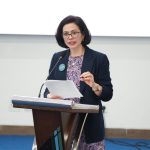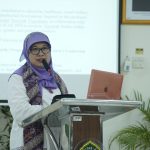
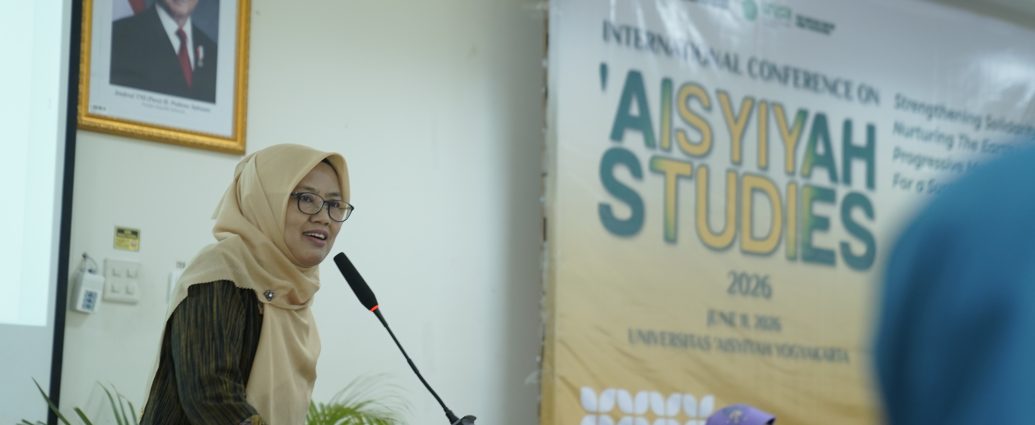
Yogyakarta, 11 June 2026 — The International Conference on Aisyiyah Studies (ICAS) 2026 officially commenced with welcoming remarks from Dr. Warsiti, S.Kp., M.Kep., Sp.Mat., Rector of Universitas ‘Aisyiyah Yogyakarta, who emphasized the importance of strengthening Aisyiyah Studies as a platform for scholarly collaboration, social transformation, and global engagement.
Addressing participants from various regions of Indonesia and several countries, Dr. Warsiti expressed her gratitude to all speakers, presenters, researchers, and institutional partners who contributed to the realization of the conference. She described ICAS 2026 as more than an academic event, characterizing it as a collective intellectual endeavor to deepen understanding of Aisyiyah’s historical legacy, contemporary contributions, and future aspirations.
According to Dr. Warsiti, Aisyiyah has demonstrated an extraordinary capacity for social transformation throughout its more than one hundred years of existence. Through its contributions in education, health services, women’s empowerment, social welfare, community development, and humanitarian work, Aisyiyah has played a significant role in shaping Indonesian society. Nevertheless, many of these achievements have not yet received adequate scholarly attention and documentation.
She noted that the establishment of ICAS reflects a growing recognition that Aisyiyah is not merely a social organization but also a rich subject of academic inquiry. Its experiences provide important insights into issues of gender, religion, leadership, education, public health, social movements, environmental sustainability, and community development.
Dr. Warsiti further emphasized that contemporary challenges—including climate change, technological disruption, demographic transformation, public health crises, and social inequality—require interdisciplinary approaches and collaborative solutions. In this context, universities and research institutions have a responsibility to generate knowledge that is both academically rigorous and socially relevant.
She also highlighted the strategic role of Universitas ‘Aisyiyah Yogyakarta in fostering research and intellectual engagement related to Muslim women, Islamic social movements, and sustainable development. Through initiatives such as The Aisyiyah Center and the Journal of Aisyiyah Studies, the university seeks to contribute to the growth of Aisyiyah Studies as an emerging field with both national and international relevance.
Importantly, Dr. Warsiti expressed her hope that ICAS would become a sustainable international platform that connects scholars across disciplines, generations, and geographical boundaries. She encouraged participants not only to present research findings but also to build long-term collaborations capable of generating meaningful contributions to society.
Referring to the conference theme, “Strengthening Solidarity, Nurturing the Earth: Progressive Muslim Women’s Leadership for a Sustainable Civilization,” she stressed that the future requires forms of leadership that combine intellectual excellence, social responsibility, environmental awareness, and ethical commitment. Aisyiyah’s long experience in community engagement and social service, she argued, offers valuable lessons for addressing these challenges.
Concluding her remarks, Dr. Warsiti expressed confidence that the ideas, discussions, and partnerships emerging from ICAS 2026 would contribute not only to the advancement of academic knowledge but also to the strengthening of social solidarity and the development of a more just, inclusive, and sustainable future.
The welcoming session set a hopeful and ambitious tone for the conference, positioning ICAS 2026 as an important milestone in the continuing development of Aisyiyah Studies and its growing contribution to global scholarly conversations.