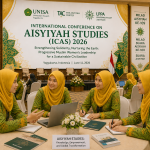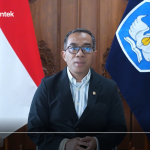

Yogyakarta, 11 June 2026 — During the invited speakers session of the International Conference on Aisyiyah Studies (ICAS) 2026, Prof. Pieternella van Doorn-Harder, a distinguished scholar of Muslim women and gender in Islam, delivered a thought-provoking presentation on the evolving role of women in shaping religious authority, knowledge production, and public engagement within contemporary Muslim societies.
Drawing on decades of research on Muslim women’s movements and female religious leadership, Prof. van Doorn-Harder emphasized that women have historically played significant roles in the transmission of Islamic knowledge, community leadership, and social transformation. However, these contributions have often been marginalized or overlooked within mainstream narratives of Islamic history.
A central argument of her presentation was that the growing visibility of Muslim women in education, scholarship, civil society, and religious institutions represents not merely a social change, but also a transformation in the ways religious authority is understood and exercised. Across different Muslim contexts, women are increasingly becoming producers of knowledge, interpreters of religious texts, educators, and public intellectuals whose voices shape contemporary religious discourse.
Prof. van Doorn-Harder highlighted that organizations such as Aisyiyah provide important examples of how women’s leadership can emerge from within Islamic traditions rather than in opposition to them. Through education, social welfare programs, health services, community development, and religious outreach, Aisyiyah has demonstrated that women’s participation in public life can be firmly grounded in faith while contributing to broader processes of social progress.
She also reflected on the importance of documenting women’s experiences, intellectual contributions, and institutional achievements. According to her, the future development of Muslim societies requires not only greater participation by women but also greater recognition of women’s knowledge and leadership as legitimate sources of authority.
Another important theme of the presentation concerned the relationship between local experiences and global conversations. Prof. van Doorn-Harder noted that many Muslim women’s organizations have developed innovative approaches to addressing issues such as education, health, poverty alleviation, gender justice, and community resilience. Yet these experiences often remain insufficiently represented in international scholarship. She therefore encouraged scholars to engage more actively in comparative and transnational research that connects local realities with broader global debates.
Referring to the development of Aisyiyah Studies, she expressed optimism that the field has the potential to contribute significantly to international discussions on Islam, gender, leadership, and social transformation. By examining the experiences of Aisyiyah and other women-led Muslim movements, researchers can generate new insights into how faith-based organizations respond to contemporary social challenges while maintaining strong ethical and spiritual foundations.
Throughout her presentation, Prof. van Doorn-Harder underscored the importance of moving beyond simplistic binaries that portray religion and women’s empowerment as opposing forces. Instead, she argued that many Muslim women have found creative ways to draw upon religious traditions as resources for leadership, education, social service, and community development.
Her presentation resonated strongly with the audience because it highlighted a theme central to ICAS 2026: the recognition that women are not merely participants in social and religious change but are often among its most important architects. By placing women’s experiences, voices, and knowledge at the center of scholarly inquiry, Prof. van Doorn-Harder challenged participants to rethink conventional understandings of authority, leadership, and intellectual contribution in contemporary Muslim societies.
In doing so, she reaffirmed the relevance of Aisyiyah as both a historical movement and a living example of how women’s leadership can contribute to more inclusive, just, and sustainable futures.