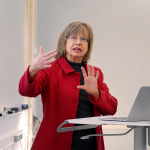

Yogyakarta, 11 June 2026 — Delivering the keynote address at the International Conference on Aisyiyah Studies (ICAS) 2026, Prof. Brian Yuliarto, Minister of Higher Education, Science, and Technology of the Republic of Indonesia, emphasized the strategic role of higher education institutions in shaping Indonesia’s future through innovation, interdisciplinary collaboration, and socially impactful research.
Addressing scholars, researchers, educators, and practitioners gathered at Universitas ‘Aisyiyah Yogyakarta, Prof. Brian highlighted that the world is currently experiencing rapid and unprecedented transformation. Technological advances, artificial intelligence, climate change, demographic shifts, and global economic uncertainty are fundamentally changing the ways societies live, work, and interact. These developments, he argued, require universities to move beyond traditional academic functions and become active contributors to solving real-world problems.
According to Prof. Brian, higher education institutions are no longer evaluated solely by their ability to produce graduates or scientific publications. Increasingly, universities are expected to generate knowledge that contributes directly to social welfare, economic development, environmental sustainability, and national competitiveness. In this context, research must not remain confined within academic circles but should be translated into innovations and policies that address the needs of society.
A central theme of his address was the importance of interdisciplinary collaboration. He emphasized that contemporary challenges are too complex to be addressed through a single disciplinary lens. Issues such as climate change, public health, gender inequality, digital transformation, and social cohesion require collaboration among scholars from the natural sciences, engineering, social sciences, humanities, health sciences, and religious studies.
Prof. Brian also highlighted the growing significance of women’s leadership in shaping the future of knowledge and innovation. He noted that women’s contributions to education, research, entrepreneurship, public service, and community development are increasingly important in building resilient and inclusive societies. Institutions such as Aisyiyah, with their long history of empowering women through education and social service, provide valuable examples of how leadership can be combined with community engagement and ethical responsibility.
Reflecting on the conference theme, “Strengthening Solidarity, Nurturing the Earth: Progressive Muslim Women’s Leadership for a Sustainable Civilization,” he emphasized that sustainability is not merely an environmental issue. Rather, it encompasses economic resilience, social justice, educational access, public health, and the cultivation of ethical values capable of guiding societies through periods of rapid change.
Prof. Brian praised Universitas ‘Aisyiyah Yogyakarta and the organizers of ICAS 2026 for creating a platform that bridges academic inquiry and social engagement. He described Aisyiyah Studies as a promising interdisciplinary field that offers new perspectives on religion, gender, education, health, leadership, and social transformation. Such scholarship, he argued, is particularly important because it connects intellectual reflection with lived experiences and community-based practices.
He further encouraged scholars to strengthen international collaboration and expand Indonesia’s contribution to global knowledge production. Research conducted in Indonesia, especially studies rooted in local experiences and social movements such as Aisyiyah, has the potential to enrich international academic discussions and provide alternative perspectives on development, community resilience, and women’s leadership.
Another important message in his keynote was the need to prepare future generations for a rapidly changing technological landscape. While digital technologies and artificial intelligence create new opportunities, they also present challenges related to ethics, inequality, misinformation, and social fragmentation. Universities, therefore, have a responsibility not only to teach technical competencies but also to cultivate critical thinking, creativity, empathy, and ethical awareness.
Concluding his address, Prof. Brian expressed optimism regarding Indonesia’s future. He emphasized that by combining scientific excellence, innovation, social responsibility, and strong ethical foundations, Indonesian universities can play a significant role in shaping a more sustainable, inclusive, and prosperous society. He also expressed hope that ICAS 2026 would contribute to the development of new ideas, collaborative research initiatives, and meaningful partnerships that extend beyond the conference itself.
His keynote address set an ambitious vision for the future of higher education, emphasizing that knowledge must not only advance science but also serve humanity and contribute to solving the pressing challenges of the twenty-first century.