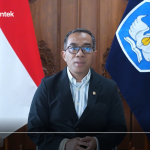

Yogyakarta, 11 June 2026 — One of the highlights of the invited speakers session at the International Conference on Aisyiyah Studies (ICAS) 2026 was the presentation by Prof. Mark Woodward, Professor of Anthropology at Arizona State University and one of the world’s leading scholars of Islam in Indonesia. Drawing upon historical, cultural, and religious perspectives, Prof. Woodward offered a compelling interpretation of Aisyiyah’s emergence within the longer trajectory of Javanese women’s leadership.
In his presentation, Prof. Woodward argued that the history of Aisyiyah should not be understood merely as a modern organizational development or a response to twentieth-century social change. Rather, he suggested that Aisyiyah represents a continuation of a much deeper cultural tradition in which women have long played significant roles in public life, moral leadership, and social transformation.
To illustrate this point, he drew an analogy between Aisyiyah and the figure of Srikandi, one of the most celebrated female characters in Javanese wayang tradition. Known for her courage, intelligence, and leadership, Srikandi occupies a unique place in Javanese cultural imagination as a woman who actively participates in public affairs while maintaining moral integrity and social responsibility.
According to Prof. Woodward, the symbolic significance of Srikandi provides an important lens through which to understand the historical role of women within Javanese society. While often portrayed as a warrior, Srikandi represents more than military strength; she embodies agency, wisdom, and the capacity of women to contribute meaningfully to the broader community. In this sense, Aisyiyah’s emergence in the early twentieth century can be seen as part of a longer historical process through which women continuously negotiated and expanded their roles within society.
A central figure in this narrative, Prof. Woodward argued, is Nyai Ahmad Dahlan, whose leadership was instrumental in establishing and shaping Aisyiyah. He portrayed Nyai Ahmad Dahlan as a modern embodiment of the srikandi ideal—a visionary woman who challenged social limitations, promoted education for women, encouraged religious learning, and created new opportunities for women’s participation in public life.
Rather than viewing Aisyiyah solely as a product of Islamic reformism, Prof. Woodward suggested that the organization’s success also reflects its ability to engage with and transform existing cultural traditions. By combining Islamic teachings with local understandings of women’s leadership and social responsibility, Aisyiyah created a model of empowerment that was both religiously grounded and culturally resonant.
His presentation also challenged simplistic assumptions that position women’s leadership as something entirely new or externally introduced. Instead, he demonstrated that traditions of female leadership have long existed within Indonesian cultural and historical contexts, even if they have not always received adequate scholarly attention. Aisyiyah, in this interpretation, represents both continuity and transformation: continuity with earlier traditions of women’s agency, and transformation through its institutionalization within a modern Islamic movement.
The presentation generated considerable interest among participants because it connected Aisyiyah’s history with broader questions of culture, identity, and social change. By situating Aisyiyah within a longer historical narrative, Prof. Woodward invited participants to reconsider the intellectual and cultural foundations of Muslim women’s leadership in Indonesia.
His reflections offered a powerful reminder that the story of Aisyiyah is not only the story of a modern organization, but also part of a much larger historical tradition of women who have shaped communities, transmitted values, and contributed to social transformation across generations. Through the figure of the srikandi, Prof. Woodward highlighted the enduring relevance of women’s leadership as both a cultural legacy and a continuing force for change in contemporary society.