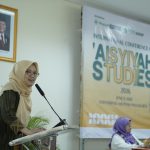

Yogyakarta, 11 June 2026 — In her invited presentation at the International Conference on Aisyiyah Studies (ICAS) 2026, Dr. Claire-Marie Hefner highlighted the central role of education in Aisyiyah’s century-long contribution to women’s advancement. Drawing from her research on Islam, education, and social transformation, she argued that Aisyiyah’s educational initiatives represent one of the most significant and enduring investments in the empowerment of Muslim women in Indonesia.
According to Dr. Hefner, education has been at the heart of Aisyiyah’s mission since its earliest years. Long before discussions of women’s empowerment became part of global development agendas, Aisyiyah had already recognized that access to education was essential for enabling women to participate fully in religious, social, economic, and public life. Through schools, universities, early childhood education centers, and various forms of community learning, Aisyiyah has consistently expanded opportunities for women across generations.
A central theme of her presentation was that education should not be understood merely as a mechanism for acquiring knowledge or professional skills. Rather, education serves as a transformative process through which individuals develop confidence, critical thinking, leadership capacities, and a sense of social responsibility. In this regard, Aisyiyah’s educational institutions have played a vital role not only in producing graduates but also in nurturing women who actively contribute to their families, communities, and society.
Dr. Hefner emphasized that one of Aisyiyah’s greatest strengths lies in its ability to integrate religious values with modern education. Instead of viewing faith and modernity as opposing forces, Aisyiyah has demonstrated that Islamic values can coexist with scientific knowledge, professional development, and social engagement. This approach has enabled generations of women to pursue education while maintaining strong ethical and spiritual foundations.
She also noted that the impact of Aisyiyah’s educational movement extends far beyond individual achievement. By educating women, Aisyiyah has contributed to broader social transformations, including improved family welfare, community development, public health awareness, and increased participation of women in leadership positions. The cumulative effect of these efforts, she argued, illustrates how educational institutions can become powerful agents of social change.
At the same time, Dr. Hefner acknowledged that contemporary educational landscapes are undergoing profound transformation. The rise of digital technologies, artificial intelligence, social media, and new forms of knowledge production is changing how younger generations learn, communicate, and construct their identities. These developments create both opportunities and challenges for educational institutions, including those within the Aisyiyah network.
In response to these changes, she encouraged Aisyiyah to continue innovating while remaining committed to its core values. Educational institutions must prepare students not only with technical competencies but also with the critical, ethical, and social capacities needed to navigate an increasingly complex world. This is particularly important for younger generations who will confront new questions related to technology, sustainability, citizenship, and global interconnectedness.
Dr. Hefner further argued that Aisyiyah’s educational experience offers valuable lessons beyond Indonesia. Around the world, many societies are seeking models of education that combine academic excellence, moral development, community engagement, and gender inclusion. Aisyiyah’s century-long experience provides a compelling example of how education can be used as a tool for empowerment while remaining rooted in local cultural and religious traditions.
Concluding her presentation, she reaffirmed that education remains one of the most strategic pathways for advancing women’s participation and leadership. While social conditions and technologies may change, the fundamental importance of education as a foundation for empowerment remains constant.
Her presentation resonated strongly with participants, reminding the audience that among Aisyiyah’s many achievements, its educational movement stands as one of its most enduring contributions—not only to the advancement of women, but also to the broader development of Indonesian society.