
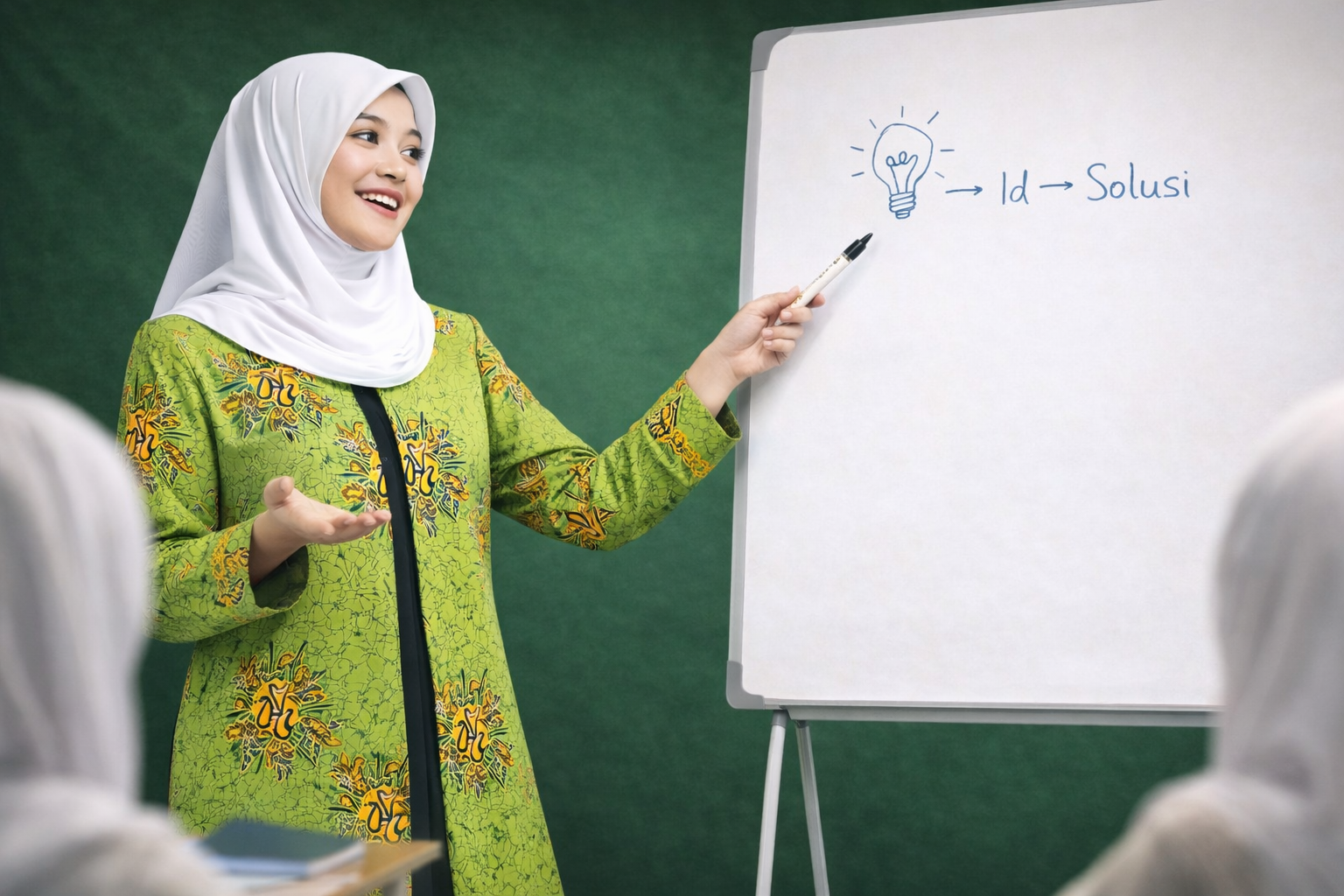




Under the grand theme “Strengthening Solidarity, Nurturing the Earth: Progressive Muslim Women’s Leadership for a Sustainable Civilization,” ICAS 2026 invites scholars, researchers, practitioners, and activists to contribute critical and forward-looking scholarship to this global conversation.
This conference seeks to explore how progressive Muslim women’s leadership—particularly within and beyond ‘Aisyiyah—responds to contemporary challenges ranging from ecological crisis and digital transformation to social justice, global health, economic empowerment, and transnational solidarity. The selected sub-topics reflect the multidimensional character of ‘Aisyiyah as a historical movement, an intellectual tradition, and a living institution engaged with local and global realities.
We welcome papers that are theoretically grounded, methodologically rigorous, and analytically rich. Contributions may be historical, empirical, conceptual, or interdisciplinary, as long as they engage meaningfully with the conference theme and offer insights relevant to sustainable civilization and Muslim women’s leadership.
Below are the thematic areas open for submission. Authors are encouraged to interpret them broadly and creatively while maintaining academic depth and clarity.
1. History, Thought, and Movements: The Legacy of ‘Aisyiyah Women’s Leadership in Nation-Building
This topic invites scholars to examine the historical trajectory and intellectual development of ‘Aisyiyah as a Muslim women’s movement that has played a significant role in nation-building. Since the early twentieth century, ‘Aisyiyah has been active not only in education and social welfare but also in shaping civic consciousness, religious reform, and women’s leadership in Indonesia.
Papers under this theme may explore intellectual transformations within the organization, its engagement with socio-political change across colonial, post-independence, and reform eras, and its evolving strategies in response to global challenges. The focus is not merely institutional history, but how ‘Aisyiyah’s legacy contributes to contemporary models of progressive Muslim women’s leadership.
2. Women and Ecological Justice: Theological Perspectives and ‘Aisyiyah’s Practices in Climate Change Mitigation and Environmental Activism (Eco-Jihad)
This sub-theme addresses the ecological crisis through theological reflection and practical engagement. It encourages exploration of how Islamic ethical concepts—such as stewardship (khalifah) and trust (amanah)—are translated into concrete environmental initiatives within ‘Aisyiyah.
Eco-jihad in this context refers to ethical and spiritual struggle for environmental sustainability. Contributions may discuss climate change mitigation, environmental education, green lifestyle movements, waste management initiatives, or women-led ecological activism. The broader aim is to analyze how faith-based women’s leadership contributes to ecological justice and sustainable civilization.
3. Da‘wah and Digital Transformation: Innovations, Opportunities, and Challenges of ‘Aisyiyah in Cyberspace
Digital transformation has reshaped religious communication and activism. This topic explores how ‘Aisyiyah adapts to and navigates the digital sphere, utilizing social media, online education platforms, and digital networks to expand its da‘wah and social engagement.
Papers may address questions of digital authority, algorithmic influence, online religious discourse, misinformation, and the transformation of organizational communication. This theme also welcomes studies on digital Islam, virtual communities, and the challenges and opportunities faced by Muslim women’s organizations in cyberspace.
4. Health, Well-being, and Family Resilience: Responses to Global Health Issues, Stunting, Mental Health, and Shifting Gender Roles
Health and well-being are central to sustainable civilization. ‘Aisyiyah has long been involved in healthcare provision and community health programs. This theme invites research on contemporary health challenges, including stunting, maternal and child health, mental health, post-pandemic recovery, and changing gender dynamics within families.
Contributions may examine the intersection of religion, public health, and social policy, highlighting how women’s leadership supports family resilience and community well-being in rapidly changing social contexts.
5. Economic Empowerment and Social Justice: Social Entrepreneurship, Green Economy, and ‘Aisyiyah’s Role in Poverty Alleviation
Economic empowerment is a key dimension of women’s leadership and social justice. This theme explores how ‘Aisyiyah promotes social entrepreneurship, cooperative movements, green economy initiatives, and community-based economic development.
Papers may analyze how Islamic ethical principles inform economic practices, how women’s economic participation strengthens social equity, and how faith-based initiatives contribute to poverty alleviation. The focus is on sustainable, value-driven economic transformation rather than growth alone.
6. Law, Politics, and Citizenship: Advocacy for Women and Children’s Rights and Strengthening Democracy
This theme highlights ‘Aisyiyah’s engagement in legal advocacy, policy reform, and civic participation. It examines Muslim women not merely as social actors but as political agents and active citizens.
Research may focus on women’s and children’s rights, gender-based violence, democratic participation, policy engagement, and the relationship between Islamic values and democratic principles. The broader aim is to understand how progressive Muslim women contribute to inclusive citizenship and democratic strengthening.
7. Cross-Border Networks: ‘Aisyiyah’s Role in Diplomacy, Global Peacebuilding, Migration, and Interfaith Dialogue
In an increasingly interconnected world, Muslim women’s movements operate beyond national boundaries. This theme explores ‘Aisyiyah’s engagement in international networks, global forums, interfaith dialogue, peacebuilding initiatives, and issues related to migration.
Contributions may examine how cross-border collaboration fosters global solidarity, how faith-based diplomacy functions, and how Muslim women’s leadership contributes to conflict resolution and intercultural understanding.
8. Media and Literacy: The Role of Suara ‘Aisyiyah and Media in Shaping Progressive Muslim Women’s Discourse
Media plays a critical role in shaping public discourse and collective identity. This theme invites analysis of how media platforms—including Suara ‘Aisyiyah—produce, circulate, and transform narratives about progressive Muslim women.
Possible topics include media history, discourse analysis, digital literacy, representation of Muslim women, and the role of media in constructing religious authority and social reform narratives. This theme recognizes media as a site of epistemic production and ideological negotiation.
9. Empowering for Vulnerable Society: Elderly, Disabilities, and Minority Groups
Sustainable civilization requires social inclusion and justice for vulnerable communities. This theme focuses on initiatives addressing the needs of the elderly, persons with disabilities, and minority groups.
Papers may explore inclusive service models, rights-based approaches, social innovation, maqasid-oriented frameworks for protecting dignity, and community-based empowerment. The emphasis is on solidarity, ethical responsibility, and inclusive leadership that ensures no group is left behind.
Together, these themes reflect a comprehensive vision of progressive Muslim women’s leadership that integrates faith, social justice, environmental responsibility, and global solidarity. ICAS 2026 invites rigorous, critical, and forward-looking scholarship to deepen this conversation and contribute to a sustainable civilization grounded in ethical and transformative values.
We look forward to your contributions to ICAS 2026 and to collectively advancing scholarship that strengthens solidarity and nurtures the future of our shared world.