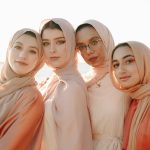
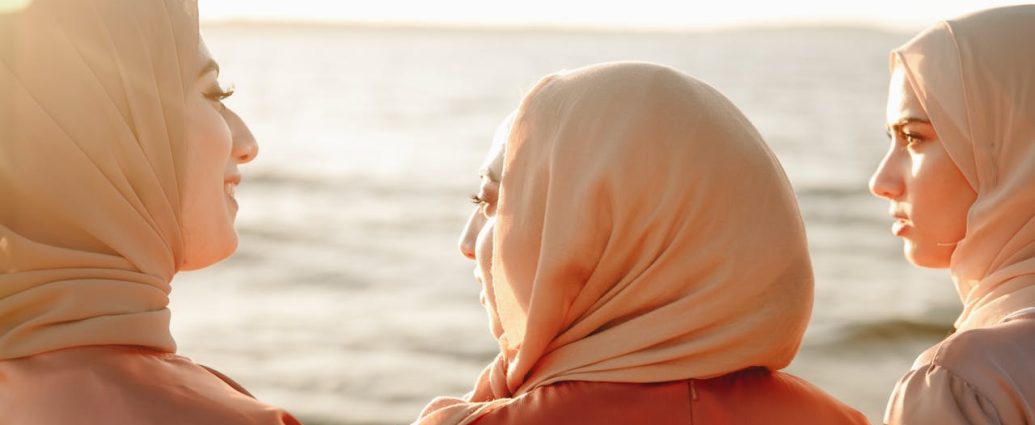
To enter a room is never a neutral act. Some arrive with ease, recognized and expected; others enter with a quiet awareness of being out of place. Space is not only physical—it is structured by norms, histories, and invisible boundaries that shape who feels entitled to speak, to lead, or even to remain.
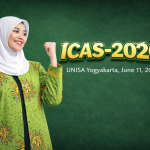
As ICAS 2026 approaches, the question of space becomes central. Not merely who is present, but how presence is experienced. Where do Muslim women stand—in institutions, in public discourse, in global conversations? And what does it take to transform presence into belonging?
From Access to Belonging
Over time, efforts have been made to increase women’s access to various spaces—education, leadership, policy forums. Yet access does not automatically lead to belonging. One may be present without feeling recognized, included without being heard.
Belonging involves a deeper transformation. It requires environments where participation is not conditional, where voices are not filtered through expectations of conformity. ICAS 2026 can serve as a site to reflect on this distinction—moving beyond the question of inclusion toward the experience of meaningful presence.
The Politics of Space
Spaces are shaped by power. Who designs them, who governs them, and who sets their norms all influence how they are experienced. In academic and global forums, certain ways of speaking, thinking, and presenting knowledge are often privileged.
For Muslim women, navigating these spaces may involve adapting to dominant expectations while also seeking to introduce alternative perspectives. This negotiation is not always visible, but it shapes the contours of participation. ICAS 2026 has the potential to make these dynamics more explicit, opening discussion on how spaces themselves can be reimagined.
Third Spaces and Hybrid Identities
Between formal institutions and private life, there exist “third spaces”—sites where identities are negotiated and new forms of belonging can emerge. These spaces are often fluid, less regulated, and more open to experimentation.
For many Muslim women, third spaces provide opportunities to engage across boundaries—religious, cultural, and social. They allow for the coexistence of multiple identities without forcing resolution. ICAS 2026 can be understood as such a space: a temporary yet meaningful convergence where new configurations of belonging may take shape.
Embodied Presence
Presence is not only intellectual; it is embodied. It is expressed through language, dress, gesture, and interaction. These elements carry meaning and can influence how individuals are perceived and how they perceive themselves.
For Muslim women, embodiment may involve navigating expectations related to faith and identity. It can become a site of both expression and negotiation. Recognizing this dimension adds depth to discussions of participation and belonging, moving beyond abstract considerations.
Aisyiyah and the Creation of Space
Aisyiyah’s history reflects a continuous effort to create and sustain spaces where women can learn, lead, and contribute. These spaces are not merely physical; they are shaped by values that emphasize dignity, knowledge, and collective responsibility.
Through the lens of Risalah Perempuan Berkemajuan, space is understood as something that can be cultivated—where women are not only present, but actively shape the environment. ICAS 2026 extends this effort to a global मंच, offering a space where diverse experiences can intersect.
Toward Meaningful Presence
As ICAS 2026 approaches, the question of space invites a broader reflection: what would it mean to create environments where presence naturally becomes belonging? Where participation is not constrained by invisible barriers, and where difference is recognized as part of the collective?
Such spaces do not emerge automatically. They require intention, reflection, and ongoing adjustment. But they also hold transformative potential.
In the end, where Muslim women stand is not only a matter of position—it is a matter of possibility. And ICAS 2026 may well become one of the spaces where that possibility is redefined.