
Every community lives through stories—some remembered, others forgotten, many never told. Narratives shape how identities are understood, how histories are preserved, and how futures are imagined. Yet not all stories carry equal weight. Some are amplified, repeated, and institutionalized, while others remain at the margins.
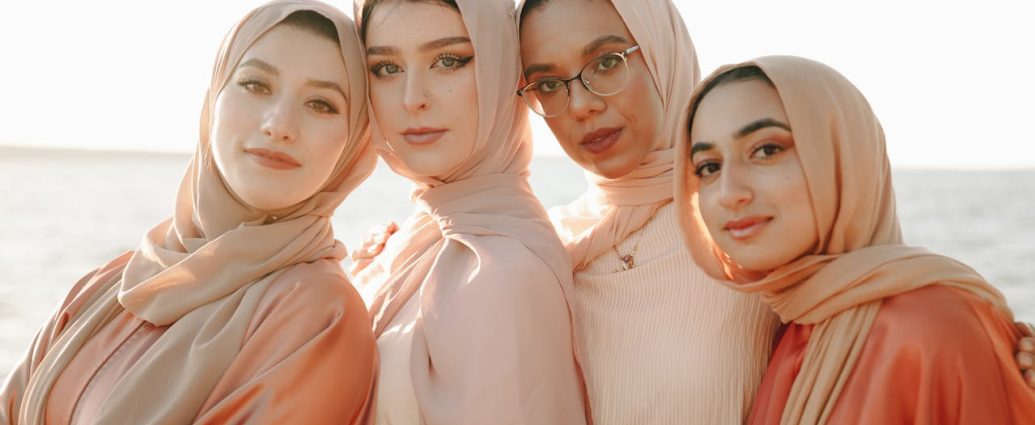
As ICAS 2026 approaches, a critical question emerges: who tells the story of Muslim women? And just as importantly, whose stories are left untold?
Narrative as Power
Narratives are not neutral. They frame reality, define legitimacy, and influence perception. In global discourse, Muslim women are often represented through limited lenses—either as subjects of oppression or symbols of empowerment. Both frames, while containing elements of truth, can oversimplify complex lived experiences.
To move beyond these binaries, it is necessary to examine how narratives are constructed. Who produces them? For whom are they intended? And what purposes do they serve? ICAS 2026 provides a space to interrogate these questions, opening possibilities for more nuanced storytelling.
Memory and Erasure
Collective memory is selective. It preserves certain events and figures while overlooking others. In many cases, women’s contributions—especially those outside formal institutions—are underrepresented in historical accounts.
This is not merely an issue of documentation; it affects how communities understand themselves. When women’s experiences are absent from collective memory, their roles in shaping society become less visible. ICAS 2026 can contribute to addressing this imbalance by bringing forward stories that have long remained peripheral.
Everyday Narratives
Not all stories are grand or dramatic. Many are found in everyday experiences—acts of care, moments of resilience, small decisions that collectively shape lives. These narratives may not always fit into conventional frameworks, but they carry deep significance.
Recognizing everyday narratives challenges dominant hierarchies of storytelling. It affirms that meaning is not only produced in extraordinary moments, but also in ordinary life. ICAS 2026 can highlight these dimensions, expanding what counts as a story worth telling.
Digital Storytelling and Visibility
The rise of digital platforms has transformed storytelling. Women now have greater opportunities to share their experiences directly, without relying solely on traditional media. Blogs, social media, and digital archives enable new forms of narrative expression.
However, digital visibility is uneven. Algorithms, audience dynamics, and platform structures influence which stories gain attention. As discussed in broader digital contexts, storytelling online is shaped by both opportunity and constraint. ICAS 2026 can engage these dynamics, exploring how digital tools can be used more effectively for inclusive storytelling.
Aisyiyah and the Work of Narration
Aisyiyah’s history itself is a testament to the importance of narrative. Its contributions to education, health, and social reform form part of a larger story about Muslim women’s agency and leadership. Yet, like many histories, these stories require continuous articulation.
Through initiatives such as publications, research, and conferences, Aisyiyah contributes to shaping how Muslim women’s experiences are understood. The framework of Risalah Perempuan Berkemajuan provides not only a vision for the future, but also a lens for interpreting the past and present.
Toward Narrative Justice
As ICAS 2026 approaches, the question of narrative invites a broader reflection on justice. What would it mean to achieve narrative justice—where diverse voices are not only heard, but recognized as shaping collective understanding?
This involves more than increasing representation. It requires rethinking whose perspectives are considered authoritative, whose experiences are validated, and how stories are circulated.
In the end, the stories we tell—and those we choose to listen to—shape the world we inhabit. ICAS 2026, in bringing together diverse voices, holds the potential to expand this narrative landscape.
The challenge is to ensure that these stories do not end with the conference, but continue to inform how Muslim women are seen, heard, and understood.


can you share template for ICAS, please..