We are living in a time when crises no longer arrive in isolation, but accumulate and reinforce one another. Climate change disrupts the rhythms of life, digital technologies accelerate and blur the boundaries of humanity, while social and religious polarization intensifies across regions. In such a moment, a fundamental question resurfaces: who holds the authority to imagine the future?
The answers often point to states, markets, and global elites. Yet, quietly—often overlooked—another set of actors is at work within everyday spaces: women. From households to communities, from educational spaces to social movements, they are not merely surviving crises but actively shaping new ways of living. It is within this context that ICAS 2026 becomes significant—not as just another academic gathering, but as a space to rethink the direction of civilization through the lived experiences and leadership of Muslim women.
Why ICAS, Why Now
ICAS 2026 does not emerge in a vacuum. It responds to an urgent need to rebuild forms of global solidarity that are increasingly fragile. The word “solidarity” in the conference theme is not a rhetorical gesture; it speaks to a fragmented world—divided by identity, economic interests, and even competing interpretations of religion.
At the same time, the phrase “nurturing the earth” signals an important shift: from exploitation to care, from domination to relationality. This is not merely an environmental concern, but a transformation in how humanity—and particularly women—are positioned in relation to the earth. ICAS seeks to connect these two dimensions: solidarity and ecology, as the ethical foundation for a form of leadership that is not only progressive, but sustainable.
Reading the Theme: What Is at Stake
The overarching theme of ICAS 2026 invites expansive interpretation, yet it also demands critical engagement. What does it mean to “strengthen solidarity” in an increasingly individualistic world? How can “nurturing the earth” be translated into contexts marked by limited resources? And perhaps most importantly, how are Muslim women positioned in this process—as symbols, or as agents shaping direction?
What is at stake is not merely the success of a conference, but the way we understand the relationship between faith, knowledge, and action. If solidarity remains at the level of rhetoric, it risks becoming hollow. If ecological concern is detached from concrete social practice, it becomes abstract. ICAS 2026 thus functions as a testing ground—whether these ideas can truly be lived and embodied.
What to Expect: Emerging Directions of Discourse
Several trajectories are likely to shape the conversations. First, the role of technology—particularly artificial intelligence and digital media—in redefining da‘wah, education, and women’s leadership. Questions of narrative control and knowledge production in digital spaces will be central.
Second, the growing recognition of mental health as integral to leadership and community wellbeing. Women, often carrying layered responsibilities, stand at a critical intersection of this issue. Third, community-based economic practices are emerging as alternatives to exploitative systems. Small-scale initiatives led by women frequently demonstrate more grounded and sustainable models than large-scale policies that fail to reach the grassroots.
At the same time, tensions will inevitably surface—between tradition and transformation, normativity and lived reality, global discourse and local context. ICAS 2026 may not resolve these tensions, but it will likely make them visible as part of an honest intellectual process.
Aisyiyah and Its Intellectual Positioning
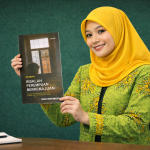
Amid these unfolding conversations, Aisyiyah enters with a relatively grounded framework through the Risalah Perempuan Berkemajuan (Treatise on Progressive Women). Within this vision, women are not positioned as peripheral actors, but as subjects who embody faith, knowledge, and action. These dimensions are inseparable, preventing both overly normative and overly pragmatic reductions.
The concept of Islam Berkemajuan (Progressive Islam) offers a productive middle path. It neither rejects modernity nor embraces it uncritically. In the context of ICAS, this means articulating a perspective capable of bridging Islamic values with contemporary global challenges. Women, within this framework, are not only agents of change but active interpreters—connecting text, tradition, and lived reality.
Toward ICAS: An Invitation to Think
As ICAS 2026 approaches, the question is not simply who will attend or what topics will be discussed, but what we truly seek to transform. Will this conference reproduce familiar discourses in new language, or will it open new horizons?
More importantly, how will the ideas generated move beyond conference rooms—into social practice, policy, and collective movements? This is where the real challenge lies. The future is not determined by who speaks the loudest, but by who can translate ideas into action.
ICAS 2026 has not yet begun. Yet even at this stage, it poses a fundamental call: the courage to imagine a different world—and the commitment to build it, together.